Economist outlines challenges, opportunities for construction sector in light of global, local trends

Econometrix director and chief economist Dr Azar Jammine provides an overview of the 2026 Budget, and also outlines the challenges and opportunities presented by both increased infrastructure spend and recent geopolitical occurrences.
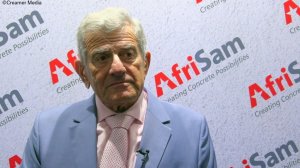


There are a number of positive trends for the country’s economy which emerged from last week’s 2026 Budget speech; however, several constraints still linger and provide challenges to key industries such as the construction industry.
This was highlighted by independent economic consulting and research firm Econometrix director and chief economist Dr Azar Jammine, speaking during construction materials company AfriSam’s Annual Budget Breakdown event, in Sandton, on March 3.
From a global perspective, Jammine pointed out that recent geopolitical incidents – with the US-Israel bombing of Iran, and Iran’s retaliation on US bases in the United Arab Emirates – would have a mixed impact on South Africa.
These could cause a considerable increase in the oil price and disruptions in supply, as well as disruptions to logistics with key routes impacted, all of which would result in higher prices for goods, pushing up inflation levels.
However, it could also be a “massive boon” for South Africa’s economy, with the rising gold and platinum group metals commodity prices.
Jammine pointed out that this comes on the back of initial signs late last year of an upturn South Africa’s economic growth. While this is still low, and below required levels, it marks a sign of improvement for the country, which has lagged behind others in recent years, he averred.
On the domestic front, he indicated that the construction industry’s contribution to GDP was down about 30% compared with 2010. He compared this to the agricultural industry, which was up 70%, noting that a decline in investment in the country had hampered its construction industry.
However, there are positive indicators, including an improvement in third quarter GDP growth, the removal of the country from the Financial Action Task Force grey list, positive growth in third-quarter fixed investment, a lower-than-expected budget deficit in the Medium Term Budget Policy Statement, a credit rating upgrade by S&P, a considerable increase in precious metals prices, improved scope for reduced inflation and lower interest rates, enhanced government revenue and fewer taxes, enhanced use of the Gold and Foreign Exchange Contingency Reserve Account to limit govt debt servicing costs and positive wealth effect from rising financial asset prices.
Moreover, there is an improvement in State-owned entity Eskom’s energy availability factor and a pipeline of renewable-energy resources.
State-owned logistics company Transnet has also marked improvements, with tonnages increasing, and the aim being to improve further.
However, despite improvements in these two major bottlenecks, water remains a major issue.
This third bottleneck, Jammine said, did however provide considerable opportunities for the construction industry, with infrastructure development required to reduce leakages.
He highlighted that the Budget indicated a shift in focus to increased infrastructure investment, rather than consumption.
While this was welcomed, it remained to be seen if this would translate into tangible results, Jammine cautioned, adding that there were challenges and impediments to this, including crime, a lack requisite skills and overregulation.
Jammine also warned that employment levels in the construction sector were down from 2019. While private sector investment in the sector was not “stellar”, it had increased over time. Sentiment in the sector was still weak, however, this was not as bad as during the pandemic.
Lower petrol and diesel prices are expected to benefit cement prices; however, high electricity tariffs are a challenge to this high-energy use industry.
Cement demand is forecast to recover slightly following a decline in 2025/26, which would allow the industry to grow slightly, albeit not at the levels required.
Jammine warned that imports were currently taking up about 10% of cement demand, and posed a threat to the local industry. He said that despite appeals to the Department of Trade, Industry and Competition to intervene through the World Trade Organisation against dumping, action had been slow.
Article Enquiry
Email Article
Save Article
Feedback
To advertise email advertising@creamermedia.co.za or click here
Research Reports
Projects
Latest Multimedia

Latest News
Showroom
Electrifying the world in a safe, smart, and sustainable way, ABB Electrification is a global technology leader in electrical distribution and...
VISIT SHOWROOM
As a reticulator, Egoli Gas provides natural gas to homes and businesses via underground pipes.
VISIT SHOWROOM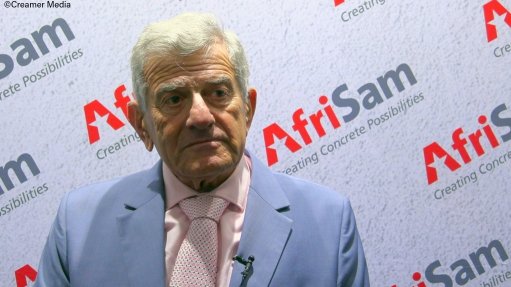
Press Office
Announcements
What's On
Subscribe to improve your user experience...
Option 1 (equivalent of R125 a month):
Receive a weekly copy of Creamer Media's Engineering News & Mining Weekly magazine
(print copy for those in South Africa and e-magazine for those outside of South Africa)
Receive daily email newsletters
Access to full search results
Access archive of magazine back copies
Access to Projects in Progress
Access to ONE Research Report of your choice in PDF format
Option 2 (equivalent of R375 a month):
All benefits from Option 1
PLUS
Access to Creamer Media's Research Channel Africa for ALL Research Reports, in PDF format, on various industrial and mining sectors
including Electricity; Water; Energy Transition; Hydrogen; Roads, Rail and Ports; Coal; Gold; Platinum; Battery Metals; etc.
Already a subscriber?
Forgotten your password?
Receive weekly copy of Creamer Media's Engineering News & Mining Weekly magazine (print copy for those in South Africa and e-magazine for those outside of South Africa)
➕
Recieve daily email newsletters
➕
Access to full search results
➕
Access archive of magazine back copies
➕
Access to Projects in Progress
➕
Access to ONE Research Report of your choice in PDF format
RESEARCH CHANNEL AFRICA
R4500 (equivalent of R375 a month)
SUBSCRIBEAll benefits from Option 1
➕
Access to Creamer Media's Research Channel Africa for ALL Research Reports on various industrial and mining sectors, in PDF format, including on:
Electricity
➕
Water
➕
Energy Transition
➕
Hydrogen
➕
Roads, Rail and Ports
➕
Coal
➕
Gold
➕
Platinum
➕
Battery Metals
➕
etc.
Receive all benefits from Option 1 or Option 2 delivered to numerous people at your company
➕
Multiple User names and Passwords for simultaneous log-ins
➕
Intranet integration access to all in your organisation